mirror of
https://github.com/QwenLM/qwen-code.git
synced 2026-01-16 13:59:14 +00:00
Compare commits
3 Commits
docs/code-
...
mingholy/f
| Author | SHA1 | Date | |
|---|---|---|---|

|
da8c49cb9d | ||
|
|
d7d3371ddf | ||
|
|
4213d06ab9 |
@@ -5,13 +5,11 @@ Qwen Code supports two authentication methods. Pick the one that matches how you
|
||||
- **Qwen OAuth (recommended)**: sign in with your `qwen.ai` account in a browser.
|
||||
- **OpenAI-compatible API**: use an API key (OpenAI or any OpenAI-compatible provider / endpoint).
|
||||
|
||||
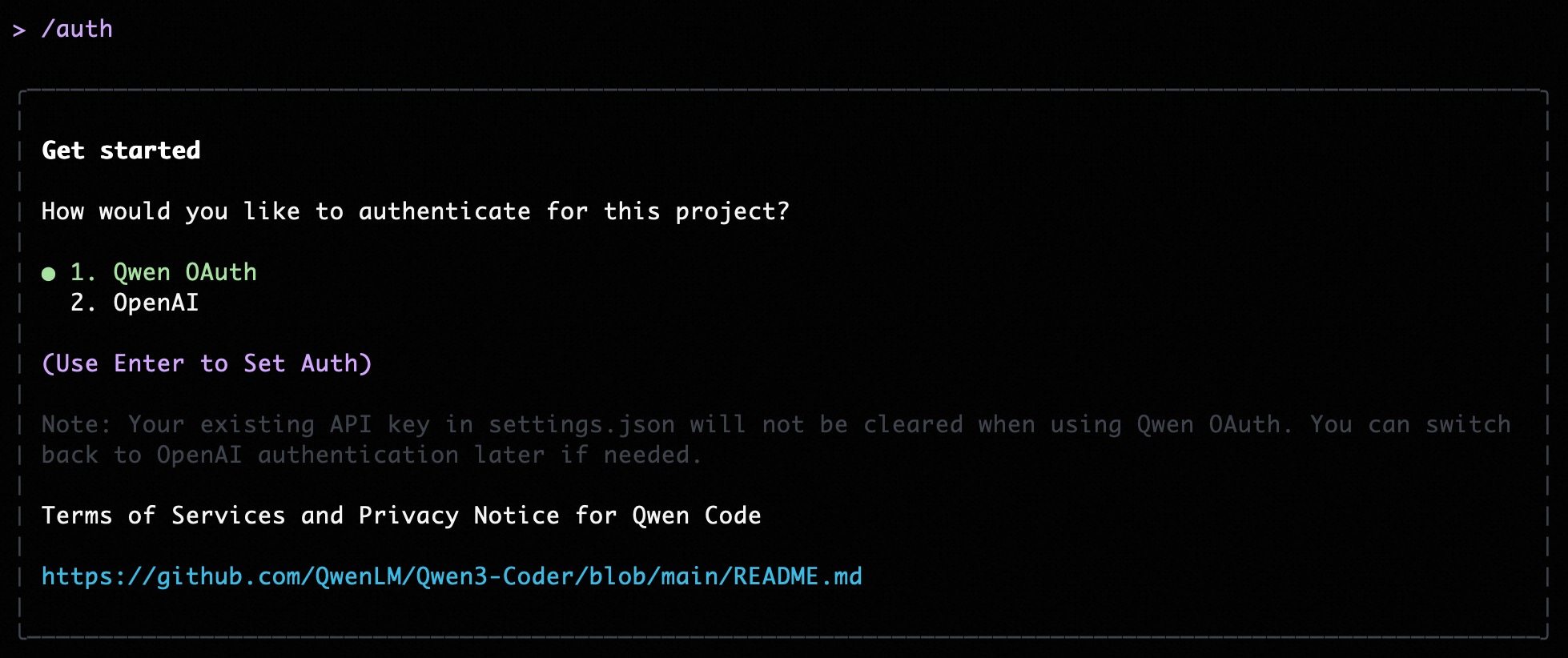
|
||||
|
||||
## Option 1: Qwen OAuth (recommended & free) 👍
|
||||
|
||||
Use this if you want the simplest setup and you're using Qwen models.
|
||||
Use this if you want the simplest setup and you’re using Qwen models.
|
||||
|
||||
- **How it works**: on first start, Qwen Code opens a browser login page. After you finish, credentials are cached locally so you usually won't need to log in again.
|
||||
- **How it works**: on first start, Qwen Code opens a browser login page. After you finish, credentials are cached locally so you usually won’t need to log in again.
|
||||
- **Requirements**: a `qwen.ai` account + internet access (at least for the first login).
|
||||
- **Benefits**: no API key management, automatic credential refresh.
|
||||
- **Cost & quota**: free, with a quota of **60 requests/minute** and **2,000 requests/day**.
|
||||
@@ -26,54 +24,15 @@ qwen
|
||||
|
||||
Use this if you want to use OpenAI models or any provider that exposes an OpenAI-compatible API (e.g. OpenAI, Azure OpenAI, OpenRouter, ModelScope, Alibaba Cloud Bailian, or a self-hosted compatible endpoint).
|
||||
|
||||
### Recommended: Coding Plan (subscription-based) 🚀
|
||||
### Quick start (interactive, recommended for local use)
|
||||
|
||||
Use this if you want predictable costs with higher usage quotas for the qwen3-coder-plus model.
|
||||
When you choose the OpenAI-compatible option in the CLI, it will prompt you for:
|
||||
|
||||
> [!IMPORTANT]
|
||||
>
|
||||
> Coding Plan is only available for users in China mainland (Beijing region).
|
||||
- **API key**
|
||||
- **Base URL** (default: `https://api.openai.com/v1`)
|
||||
- **Model** (default: `gpt-4o`)
|
||||
|
||||
- **How it works**: subscribe to the Coding Plan with a fixed monthly fee, then configure Qwen Code to use the dedicated endpoint and your subscription API key.
|
||||
- **Requirements**: an active Coding Plan subscription from [Alibaba Cloud Bailian](https://bailian.console.aliyun.com/cn-beijing/?tab=globalset#/efm/coding_plan).
|
||||
- **Benefits**: higher usage quotas, predictable monthly costs, access to latest qwen3-coder-plus model.
|
||||
- **Cost & quota**: varies by plan (see table below).
|
||||
|
||||
#### Coding Plan Pricing & Quotas
|
||||
|
||||
| Feature | Lite Basic Plan | Pro Advanced Plan |
|
||||
| :------------------ | :-------------------- | :-------------------- |
|
||||
| **Price** | ¥40/month | ¥200/month |
|
||||
| **5-Hour Limit** | Up to 1,200 requests | Up to 6,000 requests |
|
||||
| **Weekly Limit** | Up to 9,000 requests | Up to 45,000 requests |
|
||||
| **Monthly Limit** | Up to 18,000 requests | Up to 90,000 requests |
|
||||
| **Supported Model** | qwen3-coder-plus | qwen3-coder-plus |
|
||||
|
||||
#### Quick Setup for Coding Plan
|
||||
|
||||
When you select the OpenAI-compatible option in the CLI, enter these values:
|
||||
|
||||
- **API key**: `sk-sp-xxxxx`
|
||||
- **Base URL**: `https://coding.dashscope.aliyuncs.com/v1`
|
||||
- **Model**: `qwen3-coder-plus`
|
||||
|
||||
> **Note**: Coding Plan API keys have the format `sk-sp-xxxxx`, which is different from standard Alibaba Cloud API keys.
|
||||
|
||||
#### Configure via Environment Variables
|
||||
|
||||
Set these environment variables to use Coding Plan:
|
||||
|
||||
```bash
|
||||
export OPENAI_API_KEY="your-coding-plan-api-key" # Format: sk-sp-xxxxx
|
||||
export OPENAI_BASE_URL="https://coding.dashscope.aliyuncs.com/v1"
|
||||
export OPENAI_MODEL="qwen3-coder-plus"
|
||||
```
|
||||
|
||||
For more details about Coding Plan, including subscription options and troubleshooting, see the [full Coding Plan documentation](https://bailian.console.aliyun.com/cn-beijing/?tab=doc#/doc/?type=model&url=3005961).
|
||||
|
||||
### Other OpenAI-compatible Providers
|
||||
|
||||
If you are using other providers (OpenAI, Azure, local LLMs, etc.), use the following configuration methods.
|
||||
> **Note:** the CLI may display the key in plain text for verification. Make sure your terminal is not being recorded or shared.
|
||||
|
||||
### Configure via command-line arguments
|
||||
|
||||
|
||||
12
package-lock.json
generated
12
package-lock.json
generated
@@ -1,12 +1,12 @@
|
||||
{
|
||||
"name": "@qwen-code/qwen-code",
|
||||
"version": "0.7.1",
|
||||
"version": "0.7.0",
|
||||
"lockfileVersion": 3,
|
||||
"requires": true,
|
||||
"packages": {
|
||||
"": {
|
||||
"name": "@qwen-code/qwen-code",
|
||||
"version": "0.7.1",
|
||||
"version": "0.7.0",
|
||||
"workspaces": [
|
||||
"packages/*"
|
||||
],
|
||||
@@ -17310,7 +17310,7 @@
|
||||
},
|
||||
"packages/cli": {
|
||||
"name": "@qwen-code/qwen-code",
|
||||
"version": "0.7.1",
|
||||
"version": "0.7.0",
|
||||
"dependencies": {
|
||||
"@google/genai": "1.30.0",
|
||||
"@iarna/toml": "^2.2.5",
|
||||
@@ -17947,7 +17947,7 @@
|
||||
},
|
||||
"packages/core": {
|
||||
"name": "@qwen-code/qwen-code-core",
|
||||
"version": "0.7.1",
|
||||
"version": "0.7.0",
|
||||
"hasInstallScript": true,
|
||||
"dependencies": {
|
||||
"@anthropic-ai/sdk": "^0.36.1",
|
||||
@@ -21408,7 +21408,7 @@
|
||||
},
|
||||
"packages/test-utils": {
|
||||
"name": "@qwen-code/qwen-code-test-utils",
|
||||
"version": "0.7.1",
|
||||
"version": "0.7.0",
|
||||
"dev": true,
|
||||
"license": "Apache-2.0",
|
||||
"devDependencies": {
|
||||
@@ -21420,7 +21420,7 @@
|
||||
},
|
||||
"packages/vscode-ide-companion": {
|
||||
"name": "qwen-code-vscode-ide-companion",
|
||||
"version": "0.7.1",
|
||||
"version": "0.7.0",
|
||||
"license": "LICENSE",
|
||||
"dependencies": {
|
||||
"@modelcontextprotocol/sdk": "^1.25.1",
|
||||
|
||||
@@ -1,6 +1,6 @@
|
||||
{
|
||||
"name": "@qwen-code/qwen-code",
|
||||
"version": "0.7.1",
|
||||
"version": "0.7.0",
|
||||
"engines": {
|
||||
"node": ">=20.0.0"
|
||||
},
|
||||
@@ -13,7 +13,7 @@
|
||||
"url": "git+https://github.com/QwenLM/qwen-code.git"
|
||||
},
|
||||
"config": {
|
||||
"sandboxImageUri": "ghcr.io/qwenlm/qwen-code:0.7.1"
|
||||
"sandboxImageUri": "ghcr.io/qwenlm/qwen-code:0.7.0"
|
||||
},
|
||||
"scripts": {
|
||||
"start": "cross-env node scripts/start.js",
|
||||
|
||||
@@ -1,6 +1,6 @@
|
||||
{
|
||||
"name": "@qwen-code/qwen-code",
|
||||
"version": "0.7.1",
|
||||
"version": "0.7.0",
|
||||
"description": "Qwen Code",
|
||||
"repository": {
|
||||
"type": "git",
|
||||
@@ -33,7 +33,7 @@
|
||||
"dist"
|
||||
],
|
||||
"config": {
|
||||
"sandboxImageUri": "ghcr.io/qwenlm/qwen-code:0.7.1"
|
||||
"sandboxImageUri": "ghcr.io/qwenlm/qwen-code:0.7.0"
|
||||
},
|
||||
"dependencies": {
|
||||
"@google/genai": "1.30.0",
|
||||
|
||||
@@ -874,10 +874,11 @@ export async function loadCliConfig(
|
||||
}
|
||||
};
|
||||
|
||||
// ACP mode check: must include both --acp (current) and --experimental-acp (deprecated).
|
||||
// Without this check, edit, write_file, run_shell_command would be excluded in ACP mode.
|
||||
const isAcpMode = argv.acp || argv.experimentalAcp;
|
||||
if (!interactive && !isAcpMode && inputFormat !== InputFormat.STREAM_JSON) {
|
||||
if (
|
||||
!interactive &&
|
||||
!argv.experimentalAcp &&
|
||||
inputFormat !== InputFormat.STREAM_JSON
|
||||
) {
|
||||
switch (approvalMode) {
|
||||
case ApprovalMode.PLAN:
|
||||
case ApprovalMode.DEFAULT:
|
||||
|
||||
@@ -4,7 +4,11 @@
|
||||
* SPDX-License-Identifier: Apache-2.0
|
||||
*/
|
||||
|
||||
import type { Config, ModelProvidersConfig } from '@qwen-code/qwen-code-core';
|
||||
import type {
|
||||
Config,
|
||||
ContentGeneratorConfig,
|
||||
ModelProvidersConfig,
|
||||
} from '@qwen-code/qwen-code-core';
|
||||
import {
|
||||
AuthEvent,
|
||||
AuthType,
|
||||
@@ -214,11 +218,19 @@ export const useAuthCommand = (
|
||||
|
||||
if (authType === AuthType.USE_OPENAI) {
|
||||
if (credentials) {
|
||||
config.updateCredentials({
|
||||
apiKey: credentials.apiKey,
|
||||
baseUrl: credentials.baseUrl,
|
||||
model: credentials.model,
|
||||
});
|
||||
// Pass settings.model.generationConfig to updateCredentials so it can be merged
|
||||
// after clearing provider-sourced config. This ensures settings.json generationConfig
|
||||
// fields (e.g., samplingParams, timeout) are preserved.
|
||||
const settingsGenerationConfig = settings.merged.model
|
||||
?.generationConfig as Partial<ContentGeneratorConfig> | undefined;
|
||||
config.updateCredentials(
|
||||
{
|
||||
apiKey: credentials.apiKey,
|
||||
baseUrl: credentials.baseUrl,
|
||||
model: credentials.model,
|
||||
},
|
||||
settingsGenerationConfig,
|
||||
);
|
||||
await performAuth(authType, credentials);
|
||||
}
|
||||
return;
|
||||
@@ -226,7 +238,13 @@ export const useAuthCommand = (
|
||||
|
||||
await performAuth(authType);
|
||||
},
|
||||
[config, performAuth, isProviderManagedModel, onAuthError],
|
||||
[
|
||||
config,
|
||||
performAuth,
|
||||
isProviderManagedModel,
|
||||
onAuthError,
|
||||
settings.merged.model?.generationConfig,
|
||||
],
|
||||
);
|
||||
|
||||
const openAuthDialog = useCallback(() => {
|
||||
|
||||
@@ -275,7 +275,7 @@ export function ModelDialog({ onClose }: ModelDialogProps): React.JSX.Element {
|
||||
persistModelSelection(settings, effectiveModelId);
|
||||
persistAuthTypeSelection(settings, effectiveAuthType);
|
||||
|
||||
const baseUrl = after?.baseUrl ?? '(default)';
|
||||
const baseUrl = after?.baseUrl ?? t('(default)');
|
||||
const maskedKey = maskApiKey(after?.apiKey);
|
||||
uiState?.historyManager.addItem(
|
||||
{
|
||||
@@ -322,7 +322,7 @@ export function ModelDialog({ onClose }: ModelDialogProps): React.JSX.Element {
|
||||
<>
|
||||
<ConfigRow
|
||||
label="Base URL"
|
||||
value={effectiveConfig?.baseUrl ?? ''}
|
||||
value={effectiveConfig?.baseUrl ?? t('(default)')}
|
||||
badge={formatSourceBadge(sources['baseUrl'])}
|
||||
/>
|
||||
<ConfigRow
|
||||
|
||||
@@ -44,20 +44,24 @@ export interface ResolvedCliGenerationConfig {
|
||||
}
|
||||
|
||||
export function getAuthTypeFromEnv(): AuthType | undefined {
|
||||
if (process.env['OPENAI_API_KEY']) {
|
||||
if (process.env['OPENAI_API_KEY'] && process.env['OPENAI_MODEL']) {
|
||||
return AuthType.USE_OPENAI;
|
||||
}
|
||||
if (process.env['QWEN_OAUTH']) {
|
||||
return AuthType.QWEN_OAUTH;
|
||||
}
|
||||
|
||||
if (process.env['GEMINI_API_KEY']) {
|
||||
if (process.env['GEMINI_API_KEY'] && process.env['GEMINI_MODEL']) {
|
||||
return AuthType.USE_GEMINI;
|
||||
}
|
||||
if (process.env['GOOGLE_API_KEY']) {
|
||||
if (process.env['GOOGLE_API_KEY'] && process.env['GOOGLE_MODEL']) {
|
||||
return AuthType.USE_VERTEX_AI;
|
||||
}
|
||||
if (process.env['ANTHROPIC_API_KEY']) {
|
||||
if (
|
||||
process.env['ANTHROPIC_API_KEY'] &&
|
||||
process.env['ANTHROPIC_MODEL'] &&
|
||||
process.env['ANTHROPIC_BASE_URL']
|
||||
) {
|
||||
return AuthType.USE_ANTHROPIC;
|
||||
}
|
||||
|
||||
|
||||
@@ -1,6 +1,6 @@
|
||||
{
|
||||
"name": "@qwen-code/qwen-code-core",
|
||||
"version": "0.7.1",
|
||||
"version": "0.7.0",
|
||||
"description": "Qwen Code Core",
|
||||
"repository": {
|
||||
"type": "git",
|
||||
|
||||
@@ -404,7 +404,7 @@ export class Config {
|
||||
private toolRegistry!: ToolRegistry;
|
||||
private promptRegistry!: PromptRegistry;
|
||||
private subagentManager!: SubagentManager;
|
||||
private skillManager: SkillManager | null = null;
|
||||
private skillManager!: SkillManager;
|
||||
private fileSystemService: FileSystemService;
|
||||
private contentGeneratorConfig!: ContentGeneratorConfig;
|
||||
private contentGeneratorConfigSources: ContentGeneratorConfigSources = {};
|
||||
@@ -672,10 +672,8 @@ export class Config {
|
||||
}
|
||||
this.promptRegistry = new PromptRegistry();
|
||||
this.subagentManager = new SubagentManager(this);
|
||||
if (this.getExperimentalSkills()) {
|
||||
this.skillManager = new SkillManager(this);
|
||||
await this.skillManager.startWatching();
|
||||
}
|
||||
this.skillManager = new SkillManager(this);
|
||||
await this.skillManager.startWatching();
|
||||
|
||||
// Load session subagents if they were provided before initialization
|
||||
if (this.sessionSubagents.length > 0) {
|
||||
@@ -708,12 +706,15 @@ export class Config {
|
||||
* Exclusive for `OpenAIKeyPrompt` to update credentials via `/auth`
|
||||
* Delegates to ModelsConfig.
|
||||
*/
|
||||
updateCredentials(credentials: {
|
||||
apiKey?: string;
|
||||
baseUrl?: string;
|
||||
model?: string;
|
||||
}): void {
|
||||
this._modelsConfig.updateCredentials(credentials);
|
||||
updateCredentials(
|
||||
credentials: {
|
||||
apiKey?: string;
|
||||
baseUrl?: string;
|
||||
model?: string;
|
||||
},
|
||||
settingsGenerationConfig?: Partial<ContentGeneratorConfig>,
|
||||
): void {
|
||||
this._modelsConfig.updateCredentials(credentials, settingsGenerationConfig);
|
||||
}
|
||||
|
||||
/**
|
||||
@@ -1441,7 +1442,7 @@ export class Config {
|
||||
return this.subagentManager;
|
||||
}
|
||||
|
||||
getSkillManager(): SkillManager | null {
|
||||
getSkillManager(): SkillManager {
|
||||
return this.skillManager;
|
||||
}
|
||||
|
||||
|
||||
@@ -270,28 +270,28 @@ export function createContentGeneratorConfig(
|
||||
}
|
||||
|
||||
export async function createContentGenerator(
|
||||
generatorConfig: ContentGeneratorConfig,
|
||||
config: Config,
|
||||
config: ContentGeneratorConfig,
|
||||
gcConfig: Config,
|
||||
isInitialAuth?: boolean,
|
||||
): Promise<ContentGenerator> {
|
||||
const validation = validateModelConfig(generatorConfig, false);
|
||||
const validation = validateModelConfig(config, false);
|
||||
if (!validation.valid) {
|
||||
throw new Error(validation.errors.map((e) => e.message).join('\n'));
|
||||
}
|
||||
|
||||
const authType = generatorConfig.authType;
|
||||
if (!authType) {
|
||||
throw new Error('ContentGeneratorConfig must have an authType');
|
||||
}
|
||||
|
||||
let baseGenerator: ContentGenerator;
|
||||
|
||||
if (authType === AuthType.USE_OPENAI) {
|
||||
if (config.authType === AuthType.USE_OPENAI) {
|
||||
// Import OpenAIContentGenerator dynamically to avoid circular dependencies
|
||||
const { createOpenAIContentGenerator } = await import(
|
||||
'./openaiContentGenerator/index.js'
|
||||
);
|
||||
baseGenerator = createOpenAIContentGenerator(generatorConfig, config);
|
||||
} else if (authType === AuthType.QWEN_OAUTH) {
|
||||
|
||||
// Always use OpenAIContentGenerator, logging is controlled by enableOpenAILogging flag
|
||||
const generator = createOpenAIContentGenerator(config, gcConfig);
|
||||
return new LoggingContentGenerator(generator, gcConfig);
|
||||
}
|
||||
|
||||
if (config.authType === AuthType.QWEN_OAUTH) {
|
||||
// Import required classes dynamically
|
||||
const { getQwenOAuthClient: getQwenOauthClient } = await import(
|
||||
'../qwen/qwenOAuth2.js'
|
||||
);
|
||||
@@ -300,38 +300,44 @@ export async function createContentGenerator(
|
||||
);
|
||||
|
||||
try {
|
||||
// Get the Qwen OAuth client (now includes integrated token management)
|
||||
// If this is initial auth, require cached credentials to detect missing credentials
|
||||
const qwenClient = await getQwenOauthClient(
|
||||
config,
|
||||
gcConfig,
|
||||
isInitialAuth ? { requireCachedCredentials: true } : undefined,
|
||||
);
|
||||
baseGenerator = new QwenContentGenerator(
|
||||
qwenClient,
|
||||
generatorConfig,
|
||||
config,
|
||||
);
|
||||
|
||||
// Create the content generator with dynamic token management
|
||||
const generator = new QwenContentGenerator(qwenClient, config, gcConfig);
|
||||
return new LoggingContentGenerator(generator, gcConfig);
|
||||
} catch (error) {
|
||||
throw new Error(
|
||||
`${error instanceof Error ? error.message : String(error)}`,
|
||||
);
|
||||
}
|
||||
} else if (authType === AuthType.USE_ANTHROPIC) {
|
||||
}
|
||||
|
||||
if (config.authType === AuthType.USE_ANTHROPIC) {
|
||||
const { createAnthropicContentGenerator } = await import(
|
||||
'./anthropicContentGenerator/index.js'
|
||||
);
|
||||
baseGenerator = createAnthropicContentGenerator(generatorConfig, config);
|
||||
} else if (
|
||||
authType === AuthType.USE_GEMINI ||
|
||||
authType === AuthType.USE_VERTEX_AI
|
||||
|
||||
const generator = createAnthropicContentGenerator(config, gcConfig);
|
||||
return new LoggingContentGenerator(generator, gcConfig);
|
||||
}
|
||||
|
||||
if (
|
||||
config.authType === AuthType.USE_GEMINI ||
|
||||
config.authType === AuthType.USE_VERTEX_AI
|
||||
) {
|
||||
const { createGeminiContentGenerator } = await import(
|
||||
'./geminiContentGenerator/index.js'
|
||||
);
|
||||
baseGenerator = createGeminiContentGenerator(generatorConfig, config);
|
||||
} else {
|
||||
throw new Error(
|
||||
`Error creating contentGenerator: Unsupported authType: ${authType}`,
|
||||
);
|
||||
const generator = createGeminiContentGenerator(config, gcConfig);
|
||||
return new LoggingContentGenerator(generator, gcConfig);
|
||||
}
|
||||
|
||||
return new LoggingContentGenerator(baseGenerator, config, generatorConfig);
|
||||
throw new Error(
|
||||
`Error creating contentGenerator: Unsupported authType: ${config.authType}`,
|
||||
);
|
||||
}
|
||||
|
||||
@@ -12,7 +12,6 @@ import type {
|
||||
import { GenerateContentResponse } from '@google/genai';
|
||||
import type { Config } from '../../config/config.js';
|
||||
import type { ContentGenerator } from '../contentGenerator.js';
|
||||
import { AuthType } from '../contentGenerator.js';
|
||||
import { LoggingContentGenerator } from './index.js';
|
||||
import { OpenAIContentConverter } from '../openaiContentGenerator/converter.js';
|
||||
import {
|
||||
@@ -51,17 +50,14 @@ const convertGeminiResponseToOpenAISpy = vi
|
||||
choices: [],
|
||||
} as OpenAI.Chat.ChatCompletion);
|
||||
|
||||
const createConfig = (overrides: Record<string, unknown> = {}): Config => {
|
||||
const configContent = {
|
||||
authType: 'openai',
|
||||
enableOpenAILogging: false,
|
||||
...overrides,
|
||||
};
|
||||
return {
|
||||
getContentGeneratorConfig: () => configContent,
|
||||
getAuthType: () => configContent.authType as AuthType | undefined,
|
||||
} as Config;
|
||||
};
|
||||
const createConfig = (overrides: Record<string, unknown> = {}): Config =>
|
||||
({
|
||||
getContentGeneratorConfig: () => ({
|
||||
authType: 'openai',
|
||||
enableOpenAILogging: false,
|
||||
...overrides,
|
||||
}),
|
||||
}) as Config;
|
||||
|
||||
const createWrappedGenerator = (
|
||||
generateContent: ContentGenerator['generateContent'],
|
||||
@@ -128,17 +124,13 @@ describe('LoggingContentGenerator', () => {
|
||||
),
|
||||
vi.fn(),
|
||||
);
|
||||
const generatorConfig = {
|
||||
model: 'test-model',
|
||||
authType: AuthType.USE_OPENAI,
|
||||
enableOpenAILogging: true,
|
||||
openAILoggingDir: 'logs',
|
||||
schemaCompliance: 'openapi_30' as const,
|
||||
};
|
||||
const generator = new LoggingContentGenerator(
|
||||
wrapped,
|
||||
createConfig(),
|
||||
generatorConfig,
|
||||
createConfig({
|
||||
enableOpenAILogging: true,
|
||||
openAILoggingDir: 'logs',
|
||||
schemaCompliance: 'openapi_30',
|
||||
}),
|
||||
);
|
||||
|
||||
const request = {
|
||||
@@ -233,15 +225,9 @@ describe('LoggingContentGenerator', () => {
|
||||
vi.fn().mockRejectedValue(error),
|
||||
vi.fn(),
|
||||
);
|
||||
const generatorConfig = {
|
||||
model: 'test-model',
|
||||
authType: AuthType.USE_OPENAI,
|
||||
enableOpenAILogging: true,
|
||||
};
|
||||
const generator = new LoggingContentGenerator(
|
||||
wrapped,
|
||||
createConfig(),
|
||||
generatorConfig,
|
||||
createConfig({ enableOpenAILogging: true }),
|
||||
);
|
||||
|
||||
const request = {
|
||||
@@ -307,15 +293,9 @@ describe('LoggingContentGenerator', () => {
|
||||
})(),
|
||||
),
|
||||
);
|
||||
const generatorConfig = {
|
||||
model: 'test-model',
|
||||
authType: AuthType.USE_OPENAI,
|
||||
enableOpenAILogging: true,
|
||||
};
|
||||
const generator = new LoggingContentGenerator(
|
||||
wrapped,
|
||||
createConfig(),
|
||||
generatorConfig,
|
||||
createConfig({ enableOpenAILogging: true }),
|
||||
);
|
||||
|
||||
const request = {
|
||||
@@ -365,15 +345,9 @@ describe('LoggingContentGenerator', () => {
|
||||
})(),
|
||||
),
|
||||
);
|
||||
const generatorConfig = {
|
||||
model: 'test-model',
|
||||
authType: AuthType.USE_OPENAI,
|
||||
enableOpenAILogging: true,
|
||||
};
|
||||
const generator = new LoggingContentGenerator(
|
||||
wrapped,
|
||||
createConfig(),
|
||||
generatorConfig,
|
||||
createConfig({ enableOpenAILogging: true }),
|
||||
);
|
||||
|
||||
const request = {
|
||||
|
||||
@@ -31,10 +31,7 @@ import {
|
||||
logApiRequest,
|
||||
logApiResponse,
|
||||
} from '../../telemetry/loggers.js';
|
||||
import type {
|
||||
ContentGenerator,
|
||||
ContentGeneratorConfig,
|
||||
} from '../contentGenerator.js';
|
||||
import type { ContentGenerator } from '../contentGenerator.js';
|
||||
import { isStructuredError } from '../../utils/quotaErrorDetection.js';
|
||||
import { OpenAIContentConverter } from '../openaiContentGenerator/converter.js';
|
||||
import { OpenAILogger } from '../../utils/openaiLogger.js';
|
||||
@@ -53,11 +50,9 @@ export class LoggingContentGenerator implements ContentGenerator {
|
||||
constructor(
|
||||
private readonly wrapped: ContentGenerator,
|
||||
private readonly config: Config,
|
||||
generatorConfig: ContentGeneratorConfig,
|
||||
) {
|
||||
// Extract fields needed for initialization from passed config
|
||||
// (config.getContentGeneratorConfig() may not be available yet during refreshAuth)
|
||||
if (generatorConfig.enableOpenAILogging) {
|
||||
const generatorConfig = this.config.getContentGeneratorConfig();
|
||||
if (generatorConfig?.enableOpenAILogging) {
|
||||
this.openaiLogger = new OpenAILogger(generatorConfig.openAILoggingDir);
|
||||
this.schemaCompliance = generatorConfig.schemaCompliance;
|
||||
}
|
||||
@@ -94,7 +89,7 @@ export class LoggingContentGenerator implements ContentGenerator {
|
||||
model,
|
||||
durationMs,
|
||||
prompt_id,
|
||||
this.config.getAuthType(),
|
||||
this.config.getContentGeneratorConfig()?.authType,
|
||||
usageMetadata,
|
||||
responseText,
|
||||
),
|
||||
@@ -131,7 +126,7 @@ export class LoggingContentGenerator implements ContentGenerator {
|
||||
errorMessage,
|
||||
durationMs,
|
||||
prompt_id,
|
||||
this.config.getAuthType(),
|
||||
this.config.getContentGeneratorConfig()?.authType,
|
||||
errorType,
|
||||
errorStatus,
|
||||
),
|
||||
|
||||
@@ -191,7 +191,7 @@ describe('ModelsConfig', () => {
|
||||
expect(gc.apiKeyEnvKey).toBe('API_KEY_SHARED');
|
||||
});
|
||||
|
||||
it('should preserve settings generationConfig when model is updated via updateCredentials even if it matches modelProviders', () => {
|
||||
it('should use provider config when modelId exists in registry even after updateCredentials', () => {
|
||||
const modelProvidersConfig: ModelProvidersConfig = {
|
||||
openai: [
|
||||
{
|
||||
@@ -213,7 +213,7 @@ describe('ModelsConfig', () => {
|
||||
initialAuthType: AuthType.USE_OPENAI,
|
||||
modelProvidersConfig,
|
||||
generationConfig: {
|
||||
model: 'model-a',
|
||||
model: 'custom-model',
|
||||
samplingParams: { temperature: 0.9, max_tokens: 999 },
|
||||
timeout: 9999,
|
||||
maxRetries: 9,
|
||||
@@ -235,30 +235,30 @@ describe('ModelsConfig', () => {
|
||||
},
|
||||
});
|
||||
|
||||
// User manually updates the model via updateCredentials (e.g. key prompt flow).
|
||||
// Even if the model ID matches a modelProviders entry, we must not apply provider defaults
|
||||
// that would overwrite settings.model.generationConfig.
|
||||
modelsConfig.updateCredentials({ model: 'model-a' });
|
||||
// User manually updates credentials via updateCredentials.
|
||||
// Note: In practice, handleAuthSelect prevents using a modelId that matches a provider model,
|
||||
// but if syncAfterAuthRefresh is called with a modelId that exists in registry,
|
||||
// we should use provider config.
|
||||
modelsConfig.updateCredentials({ apiKey: 'manual-key' });
|
||||
|
||||
modelsConfig.syncAfterAuthRefresh(
|
||||
AuthType.USE_OPENAI,
|
||||
modelsConfig.getModel(),
|
||||
);
|
||||
// syncAfterAuthRefresh with a modelId that exists in registry should use provider config
|
||||
modelsConfig.syncAfterAuthRefresh(AuthType.USE_OPENAI, 'model-a');
|
||||
|
||||
const gc = currentGenerationConfig(modelsConfig);
|
||||
expect(gc.model).toBe('model-a');
|
||||
expect(gc.samplingParams?.temperature).toBe(0.9);
|
||||
expect(gc.samplingParams?.max_tokens).toBe(999);
|
||||
expect(gc.timeout).toBe(9999);
|
||||
expect(gc.maxRetries).toBe(9);
|
||||
// Provider config should be applied
|
||||
expect(gc.samplingParams?.temperature).toBe(0.1);
|
||||
expect(gc.samplingParams?.max_tokens).toBe(123);
|
||||
expect(gc.timeout).toBe(111);
|
||||
expect(gc.maxRetries).toBe(1);
|
||||
});
|
||||
|
||||
it('should preserve settings generationConfig across multiple auth refreshes after updateCredentials', () => {
|
||||
it('should preserve settings generationConfig when modelId does not exist in registry', () => {
|
||||
const modelProvidersConfig: ModelProvidersConfig = {
|
||||
openai: [
|
||||
{
|
||||
id: 'model-a',
|
||||
name: 'Model A',
|
||||
id: 'provider-model',
|
||||
name: 'Provider Model',
|
||||
baseUrl: 'https://api.example.com/v1',
|
||||
envKey: 'API_KEY_A',
|
||||
generationConfig: {
|
||||
@@ -270,11 +270,12 @@ describe('ModelsConfig', () => {
|
||||
],
|
||||
};
|
||||
|
||||
// Simulate settings with a custom model (not in registry)
|
||||
const modelsConfig = new ModelsConfig({
|
||||
initialAuthType: AuthType.USE_OPENAI,
|
||||
modelProvidersConfig,
|
||||
generationConfig: {
|
||||
model: 'model-a',
|
||||
model: 'custom-model',
|
||||
samplingParams: { temperature: 0.9, max_tokens: 999 },
|
||||
timeout: 9999,
|
||||
maxRetries: 9,
|
||||
@@ -296,25 +297,21 @@ describe('ModelsConfig', () => {
|
||||
},
|
||||
});
|
||||
|
||||
// User manually sets credentials for a custom model (not in registry)
|
||||
modelsConfig.updateCredentials({
|
||||
apiKey: 'manual-key',
|
||||
baseUrl: 'https://manual.example.com/v1',
|
||||
model: 'model-a',
|
||||
model: 'custom-model',
|
||||
});
|
||||
|
||||
// First auth refresh
|
||||
modelsConfig.syncAfterAuthRefresh(
|
||||
AuthType.USE_OPENAI,
|
||||
modelsConfig.getModel(),
|
||||
);
|
||||
// First auth refresh - modelId doesn't exist in registry, so credentials should be preserved
|
||||
modelsConfig.syncAfterAuthRefresh(AuthType.USE_OPENAI, 'custom-model');
|
||||
// Second auth refresh should still preserve settings generationConfig
|
||||
modelsConfig.syncAfterAuthRefresh(
|
||||
AuthType.USE_OPENAI,
|
||||
modelsConfig.getModel(),
|
||||
);
|
||||
modelsConfig.syncAfterAuthRefresh(AuthType.USE_OPENAI, 'custom-model');
|
||||
|
||||
const gc = currentGenerationConfig(modelsConfig);
|
||||
expect(gc.model).toBe('model-a');
|
||||
expect(gc.model).toBe('custom-model');
|
||||
// Settings-sourced generation config should be preserved since modelId doesn't exist in registry
|
||||
expect(gc.samplingParams?.temperature).toBe(0.9);
|
||||
expect(gc.samplingParams?.max_tokens).toBe(999);
|
||||
expect(gc.timeout).toBe(9999);
|
||||
|
||||
@@ -307,6 +307,33 @@ export class ModelsConfig {
|
||||
return this.generationConfigSources;
|
||||
}
|
||||
|
||||
/**
|
||||
* Merge settings generation config, preserving existing values.
|
||||
* Used when provider-sourced config is cleared but settings should still apply.
|
||||
*/
|
||||
mergeSettingsGenerationConfig(
|
||||
settingsGenerationConfig?: Partial<ContentGeneratorConfig>,
|
||||
): void {
|
||||
if (!settingsGenerationConfig) {
|
||||
return;
|
||||
}
|
||||
|
||||
for (const field of MODEL_GENERATION_CONFIG_FIELDS) {
|
||||
if (
|
||||
!(field in this._generationConfig) &&
|
||||
field in settingsGenerationConfig
|
||||
) {
|
||||
// eslint-disable-next-line @typescript-eslint/no-explicit-any
|
||||
(this._generationConfig as any)[field] =
|
||||
settingsGenerationConfig[field];
|
||||
this.generationConfigSources[field] = {
|
||||
kind: 'settings',
|
||||
detail: `model.generationConfig.${field}`,
|
||||
};
|
||||
}
|
||||
}
|
||||
}
|
||||
|
||||
/**
|
||||
* Update credentials in generation config.
|
||||
* Sets a flag to prevent syncAfterAuthRefresh from overriding these credentials.
|
||||
@@ -314,12 +341,20 @@ export class ModelsConfig {
|
||||
* When credentials are manually set, we clear all provider-sourced configuration
|
||||
* to maintain provider atomicity (either fully applied or not at all).
|
||||
* Other layers (CLI, env, settings, defaults) will participate in resolve.
|
||||
*
|
||||
* @param settingsGenerationConfig Optional generation config from settings.json
|
||||
* to merge after clearing provider-sourced config.
|
||||
* This ensures settings.model.generationConfig fields
|
||||
* (e.g., samplingParams, timeout) are preserved.
|
||||
*/
|
||||
updateCredentials(credentials: {
|
||||
apiKey?: string;
|
||||
baseUrl?: string;
|
||||
model?: string;
|
||||
}): void {
|
||||
updateCredentials(
|
||||
credentials: {
|
||||
apiKey?: string;
|
||||
baseUrl?: string;
|
||||
model?: string;
|
||||
},
|
||||
settingsGenerationConfig?: Partial<ContentGeneratorConfig>,
|
||||
): void {
|
||||
/**
|
||||
* If any fields are updated here, we treat the resulting config as manually overridden
|
||||
* and avoid applying modelProvider defaults during the next auth refresh.
|
||||
@@ -359,6 +394,14 @@ export class ModelsConfig {
|
||||
this.strictModelProviderSelection = false;
|
||||
// Clear apiKeyEnvKey to prevent validation from requiring environment variable
|
||||
this._generationConfig.apiKeyEnvKey = undefined;
|
||||
|
||||
// After clearing provider-sourced config, merge settings.model.generationConfig
|
||||
// to ensure fields like samplingParams, timeout, etc. are preserved.
|
||||
// This follows the resolution strategy where settings.model.generationConfig
|
||||
// has lower priority than programmatic overrides but should still be applied.
|
||||
if (settingsGenerationConfig) {
|
||||
this.mergeSettingsGenerationConfig(settingsGenerationConfig);
|
||||
}
|
||||
}
|
||||
|
||||
/**
|
||||
@@ -587,50 +630,88 @@ export class ModelsConfig {
|
||||
}
|
||||
|
||||
/**
|
||||
* Called by Config.refreshAuth to sync state after auth refresh.
|
||||
*
|
||||
* IMPORTANT: If credentials were manually set via updateCredentials(),
|
||||
* we should NOT override them with modelProvider defaults.
|
||||
* This handles the case where user inputs credentials via OpenAIKeyPrompt
|
||||
* after removing environment variables for a previously selected model.
|
||||
* Sync state after auth refresh with fallback strategy:
|
||||
* 1. If modelId can be found in modelRegistry, use the config from modelRegistry.
|
||||
* 2. Otherwise, if existing credentials exist in resolved generationConfig from other sources
|
||||
* (not modelProviders), preserve them and update authType/modelId only.
|
||||
* 3. Otherwise, fall back to default model for the authType.
|
||||
* 4. If no default is available, leave the generationConfig incomplete and let
|
||||
* resolveContentGeneratorConfigWithSources throw exceptions as expected.
|
||||
*/
|
||||
syncAfterAuthRefresh(authType: AuthType, modelId?: string): void {
|
||||
// Check if we have manually set credentials that should be preserved
|
||||
const preserveManualCredentials = this.hasManualCredentials;
|
||||
this.strictModelProviderSelection = false;
|
||||
const previousAuthType = this.currentAuthType;
|
||||
this.currentAuthType = authType;
|
||||
|
||||
// If credentials were manually set, don't apply modelProvider defaults
|
||||
// Just update the authType and preserve the manually set credentials
|
||||
if (preserveManualCredentials && authType === AuthType.USE_OPENAI) {
|
||||
this.strictModelProviderSelection = false;
|
||||
this.currentAuthType = authType;
|
||||
// Step 1: If modelId exists in registry, always use config from modelRegistry
|
||||
// Manual credentials won't have a modelId that matches a provider model (handleAuthSelect prevents it),
|
||||
// so if modelId exists in registry, we should always use provider config.
|
||||
// This handles provider switching even within the same authType.
|
||||
if (modelId && this.modelRegistry.hasModel(authType, modelId)) {
|
||||
const resolved = this.modelRegistry.getModel(authType, modelId);
|
||||
if (resolved) {
|
||||
this.applyResolvedModelDefaults(resolved);
|
||||
this.strictModelProviderSelection = true;
|
||||
return;
|
||||
}
|
||||
}
|
||||
|
||||
// Step 2: Check if there are existing credentials from other sources (not modelProviders)
|
||||
const apiKeySource = this.generationConfigSources['apiKey'];
|
||||
const baseUrlSource = this.generationConfigSources['baseUrl'];
|
||||
const hasExistingCredentials =
|
||||
(this._generationConfig.apiKey &&
|
||||
apiKeySource?.kind !== 'modelProviders') ||
|
||||
(this._generationConfig.baseUrl &&
|
||||
baseUrlSource?.kind !== 'modelProviders');
|
||||
|
||||
// Only preserve credentials if:
|
||||
// 1. AuthType hasn't changed (credentials are authType-specific), AND
|
||||
// 2. The modelId doesn't exist in the registry (if it did, we would have used provider config in Step 1), AND
|
||||
// 3. Either:
|
||||
// a. We have manual credentials (set via updateCredentials), OR
|
||||
// b. We have existing credentials
|
||||
// Note: Even if authType hasn't changed, switching to a different provider model (that exists in registry)
|
||||
// will use provider config (Step 1), not preserve old credentials. This ensures credentials change when
|
||||
// switching providers, independent of authType changes.
|
||||
const isAuthTypeChange = previousAuthType !== authType;
|
||||
const shouldPreserveCredentials =
|
||||
!isAuthTypeChange &&
|
||||
(modelId === undefined ||
|
||||
!this.modelRegistry.hasModel(authType, modelId)) &&
|
||||
(this.hasManualCredentials || hasExistingCredentials);
|
||||
|
||||
if (shouldPreserveCredentials) {
|
||||
// Preserve existing credentials, just update authType and modelId if provided
|
||||
if (modelId) {
|
||||
this._generationConfig.model = modelId;
|
||||
if (!this.generationConfigSources['model']) {
|
||||
this.generationConfigSources['model'] = {
|
||||
kind: 'programmatic',
|
||||
detail: 'auth refresh (preserved credentials)',
|
||||
};
|
||||
}
|
||||
}
|
||||
return;
|
||||
}
|
||||
|
||||
this.strictModelProviderSelection = false;
|
||||
// Step 3: Fall back to default model for the authType
|
||||
const defaultModel =
|
||||
this.modelRegistry.getDefaultModelForAuthType(authType);
|
||||
if (defaultModel) {
|
||||
this.applyResolvedModelDefaults(defaultModel);
|
||||
return;
|
||||
}
|
||||
|
||||
if (modelId && this.modelRegistry.hasModel(authType, modelId)) {
|
||||
const resolved = this.modelRegistry.getModel(authType, modelId);
|
||||
if (resolved) {
|
||||
// Ensure applyResolvedModelDefaults can correctly apply authType-specific
|
||||
// behavior (e.g., Qwen OAuth placeholder token) by setting currentAuthType
|
||||
// before applying defaults.
|
||||
this.currentAuthType = authType;
|
||||
this.applyResolvedModelDefaults(resolved);
|
||||
}
|
||||
} else {
|
||||
// If the provided modelId doesn't exist in the registry for the new authType,
|
||||
// use the default model for that authType instead of keeping the old model.
|
||||
// This handles the case where switching from one authType (e.g., OPENAI with
|
||||
// env vars) to another (e.g., qwen-oauth) - we should use the default model
|
||||
// for the new authType, not the old model.
|
||||
this.currentAuthType = authType;
|
||||
const defaultModel =
|
||||
this.modelRegistry.getDefaultModelForAuthType(authType);
|
||||
if (defaultModel) {
|
||||
this.applyResolvedModelDefaults(defaultModel);
|
||||
// Step 4: No default available - leave generationConfig incomplete
|
||||
// resolveContentGeneratorConfigWithSources will throw exceptions as expected
|
||||
if (modelId) {
|
||||
this._generationConfig.model = modelId;
|
||||
if (!this.generationConfigSources['model']) {
|
||||
this.generationConfigSources['model'] = {
|
||||
kind: 'programmatic',
|
||||
detail: 'auth refresh (no default model)',
|
||||
};
|
||||
}
|
||||
}
|
||||
}
|
||||
|
||||
@@ -751,6 +751,7 @@ describe('getQwenOAuthClient', () => {
|
||||
beforeEach(() => {
|
||||
mockConfig = {
|
||||
isBrowserLaunchSuppressed: vi.fn().mockReturnValue(false),
|
||||
isInteractive: vi.fn().mockReturnValue(true),
|
||||
} as unknown as Config;
|
||||
|
||||
originalFetch = global.fetch;
|
||||
@@ -839,9 +840,7 @@ describe('getQwenOAuthClient', () => {
|
||||
requireCachedCredentials: true,
|
||||
}),
|
||||
),
|
||||
).rejects.toThrow(
|
||||
'No cached Qwen-OAuth credentials found. Please re-authenticate.',
|
||||
);
|
||||
).rejects.toThrow('Please use /auth to re-authenticate.');
|
||||
|
||||
expect(global.fetch).not.toHaveBeenCalled();
|
||||
|
||||
@@ -1007,6 +1006,7 @@ describe('getQwenOAuthClient - Enhanced Error Scenarios', () => {
|
||||
beforeEach(() => {
|
||||
mockConfig = {
|
||||
isBrowserLaunchSuppressed: vi.fn().mockReturnValue(false),
|
||||
isInteractive: vi.fn().mockReturnValue(true),
|
||||
} as unknown as Config;
|
||||
|
||||
originalFetch = global.fetch;
|
||||
@@ -1202,6 +1202,7 @@ describe('authWithQwenDeviceFlow - Comprehensive Testing', () => {
|
||||
beforeEach(() => {
|
||||
mockConfig = {
|
||||
isBrowserLaunchSuppressed: vi.fn().mockReturnValue(false),
|
||||
isInteractive: vi.fn().mockReturnValue(true),
|
||||
} as unknown as Config;
|
||||
|
||||
originalFetch = global.fetch;
|
||||
@@ -1405,6 +1406,7 @@ describe('Browser Launch and Error Handling', () => {
|
||||
beforeEach(() => {
|
||||
mockConfig = {
|
||||
isBrowserLaunchSuppressed: vi.fn().mockReturnValue(false),
|
||||
isInteractive: vi.fn().mockReturnValue(true),
|
||||
} as unknown as Config;
|
||||
|
||||
originalFetch = global.fetch;
|
||||
@@ -2043,6 +2045,7 @@ describe('SharedTokenManager Integration in QwenOAuth2Client', () => {
|
||||
it('should handle TokenManagerError types correctly in getQwenOAuthClient', async () => {
|
||||
const mockConfig = {
|
||||
isBrowserLaunchSuppressed: vi.fn().mockReturnValue(true),
|
||||
isInteractive: vi.fn().mockReturnValue(true),
|
||||
} as unknown as Config;
|
||||
|
||||
// Test different TokenManagerError types
|
||||
|
||||
@@ -516,9 +516,7 @@ export async function getQwenOAuthClient(
|
||||
}
|
||||
|
||||
if (options?.requireCachedCredentials) {
|
||||
throw new Error(
|
||||
'No cached Qwen-OAuth credentials found. Please re-authenticate.',
|
||||
);
|
||||
throw new Error('Please use /auth to re-authenticate.');
|
||||
}
|
||||
|
||||
// If we couldn't obtain valid credentials via SharedTokenManager, fall back to
|
||||
@@ -740,11 +738,9 @@ async function authWithQwenDeviceFlow(
|
||||
// Emit device authorization event for UI integration immediately
|
||||
qwenOAuth2Events.emit(QwenOAuth2Event.AuthUri, deviceAuth);
|
||||
|
||||
// Always show the fallback message in non-interactive environments to ensure
|
||||
// users can see the authorization URL even if browser launching is attempted.
|
||||
// This is critical for headless/remote environments where browser launching
|
||||
// may silently fail without throwing an error.
|
||||
showFallbackMessage(deviceAuth.verification_uri_complete);
|
||||
if (config.isBrowserLaunchSuppressed() || !config.isInteractive()) {
|
||||
showFallbackMessage(deviceAuth.verification_uri_complete);
|
||||
}
|
||||
|
||||
// Try to open browser if not suppressed
|
||||
if (!config.isBrowserLaunchSuppressed()) {
|
||||
|
||||
@@ -235,7 +235,6 @@ export class SkillManager {
|
||||
}
|
||||
|
||||
this.watchStarted = true;
|
||||
await this.ensureUserSkillsDir();
|
||||
await this.refreshCache();
|
||||
this.updateWatchersFromCache();
|
||||
}
|
||||
@@ -487,14 +486,29 @@ export class SkillManager {
|
||||
}
|
||||
|
||||
private updateWatchersFromCache(): void {
|
||||
const watchTargets = new Set<string>(
|
||||
(['project', 'user'] as const)
|
||||
.map((level) => this.getSkillsBaseDir(level))
|
||||
.filter((baseDir) => fsSync.existsSync(baseDir)),
|
||||
);
|
||||
const desiredPaths = new Set<string>();
|
||||
|
||||
for (const level of ['project', 'user'] as const) {
|
||||
const baseDir = this.getSkillsBaseDir(level);
|
||||
const parentDir = path.dirname(baseDir);
|
||||
if (fsSync.existsSync(parentDir)) {
|
||||
desiredPaths.add(parentDir);
|
||||
}
|
||||
if (fsSync.existsSync(baseDir)) {
|
||||
desiredPaths.add(baseDir);
|
||||
}
|
||||
|
||||
const levelSkills = this.skillsCache?.get(level) || [];
|
||||
for (const skill of levelSkills) {
|
||||
const skillDir = path.dirname(skill.filePath);
|
||||
if (fsSync.existsSync(skillDir)) {
|
||||
desiredPaths.add(skillDir);
|
||||
}
|
||||
}
|
||||
}
|
||||
|
||||
for (const existingPath of this.watchers.keys()) {
|
||||
if (!watchTargets.has(existingPath)) {
|
||||
if (!desiredPaths.has(existingPath)) {
|
||||
void this.watchers
|
||||
.get(existingPath)
|
||||
?.close()
|
||||
@@ -508,7 +522,7 @@ export class SkillManager {
|
||||
}
|
||||
}
|
||||
|
||||
for (const watchPath of watchTargets) {
|
||||
for (const watchPath of desiredPaths) {
|
||||
if (this.watchers.has(watchPath)) {
|
||||
continue;
|
||||
}
|
||||
@@ -543,16 +557,4 @@ export class SkillManager {
|
||||
void this.refreshCache().then(() => this.updateWatchersFromCache());
|
||||
}, 150);
|
||||
}
|
||||
|
||||
private async ensureUserSkillsDir(): Promise<void> {
|
||||
const baseDir = this.getSkillsBaseDir('user');
|
||||
try {
|
||||
await fs.mkdir(baseDir, { recursive: true });
|
||||
} catch (error) {
|
||||
console.warn(
|
||||
`Failed to create user skills directory at ${baseDir}:`,
|
||||
error,
|
||||
);
|
||||
}
|
||||
}
|
||||
}
|
||||
|
||||
@@ -53,7 +53,7 @@ export class SkillTool extends BaseDeclarativeTool<SkillParams, ToolResult> {
|
||||
false, // canUpdateOutput
|
||||
);
|
||||
|
||||
this.skillManager = config.getSkillManager()!;
|
||||
this.skillManager = config.getSkillManager();
|
||||
this.skillManager.addChangeListener(() => {
|
||||
void this.refreshSkills();
|
||||
});
|
||||
|
||||
@@ -1,6 +1,6 @@
|
||||
{
|
||||
"name": "@qwen-code/qwen-code-test-utils",
|
||||
"version": "0.7.1",
|
||||
"version": "0.7.0",
|
||||
"private": true,
|
||||
"main": "src/index.ts",
|
||||
"license": "Apache-2.0",
|
||||
|
||||
@@ -1,11 +1,6 @@
|
||||
# Qwen Code Companion
|
||||
|
||||
[](https://marketplace.visualstudio.com/items?itemName=qwenlm.qwen-code-vscode-ide-companion)
|
||||
[](https://marketplace.visualstudio.com/items?itemName=qwenlm.qwen-code-vscode-ide-companion)
|
||||
[](https://open-vsx.org/extension/qwenlm/qwen-code-vscode-ide-companion)
|
||||
[](https://marketplace.visualstudio.com/items?itemName=qwenlm.qwen-code-vscode-ide-companion)
|
||||
|
||||
Seamlessly integrate [Qwen Code](https://github.com/QwenLM/qwen-code) into Visual Studio Code with native IDE features and an intuitive chat interface. This extension bundles everything you need — no additional installation required.
|
||||
Seamlessly integrate [Qwen Code](https://github.com/QwenLM/qwen-code) into Visual Studio Code with native IDE features and an intuitive interface. This extension bundles everything you need to get started immediately.
|
||||
|
||||
## Demo
|
||||
|
||||
@@ -16,7 +11,7 @@ Seamlessly integrate [Qwen Code](https://github.com/QwenLM/qwen-code) into Visua
|
||||
|
||||
## Features
|
||||
|
||||
- **Native IDE experience**: Dedicated Qwen Code Chat panel accessed via the Qwen icon in the editor title bar
|
||||
- **Native IDE experience**: Dedicated Qwen Code sidebar panel accessed via the Qwen icon
|
||||
- **Native diffing**: Review, edit, and accept changes in VS Code's diff view
|
||||
- **Auto-accept edits mode**: Automatically apply Qwen's changes as they're made
|
||||
- **File management**: @-mention files or attach files and images using the system file picker
|
||||
@@ -25,46 +20,73 @@ Seamlessly integrate [Qwen Code](https://github.com/QwenLM/qwen-code) into Visua
|
||||
|
||||
## Requirements
|
||||
|
||||
- Visual Studio Code 1.85.0 or newer (also works with Cursor, Windsurf, and other VS Code-based editors)
|
||||
- Visual Studio Code 1.85.0 or newer
|
||||
|
||||
## Quick Start
|
||||
## Installation
|
||||
|
||||
1. **Install** from the [VS Code Marketplace](https://marketplace.visualstudio.com/items?itemName=qwenlm.qwen-code-vscode-ide-companion) or [Open VSX Registry](https://open-vsx.org/extension/qwenlm/qwen-code-vscode-ide-companion)
|
||||
1. Install from the VS Code Marketplace: https://marketplace.visualstudio.com/items?itemName=qwenlm.qwen-code-vscode-ide-companion
|
||||
|
||||
2. **Open the Chat panel** using one of these methods:
|
||||
- Click the **Qwen icon** in the top-right corner of the editor
|
||||
- Run `Qwen Code: Open` from the Command Palette (`Cmd+Shift+P` / `Ctrl+Shift+P`)
|
||||
2. Two ways to use
|
||||
- Chat panel: Click the Qwen icon in the Activity Bar, or run `Qwen Code: Open` from the Command Palette (`Cmd+Shift+P` / `Ctrl+Shift+P`).
|
||||
- Terminal session (classic): Run `Qwen Code: Run` to launch a session in the integrated terminal (bundled CLI).
|
||||
|
||||
3. **Start chatting** — Ask Qwen to help with coding tasks, explain code, fix bugs, or write new features
|
||||
## Development and Debugging
|
||||
|
||||
## Commands
|
||||
To debug and develop this extension locally:
|
||||
|
||||
| Command | Description |
|
||||
| -------------------------------- | ------------------------------------------------------ |
|
||||
| `Qwen Code: Open` | Open the Qwen Code Chat panel |
|
||||
| `Qwen Code: Run` | Launch a classic terminal session with the bundled CLI |
|
||||
| `Qwen Code: Accept Current Diff` | Accept the currently displayed diff |
|
||||
| `Qwen Code: Close Diff Editor` | Close/reject the current diff |
|
||||
1. **Clone the repository**
|
||||
|
||||
## Feedback & Issues
|
||||
```bash
|
||||
git clone https://github.com/QwenLM/qwen-code.git
|
||||
cd qwen-code
|
||||
```
|
||||
|
||||
- 🐛 [Report bugs](https://github.com/QwenLM/qwen-code/issues/new?template=bug_report.yml&labels=bug,vscode-ide-companion)
|
||||
- 💡 [Request features](https://github.com/QwenLM/qwen-code/issues/new?template=feature_request.yml&labels=enhancement,vscode-ide-companion)
|
||||
- 📖 [Documentation](https://qwenlm.github.io/qwen-code-docs/)
|
||||
- 📋 [Changelog](https://github.com/QwenLM/qwen-code/releases)
|
||||
2. **Install dependencies**
|
||||
|
||||
## Contributing
|
||||
```bash
|
||||
npm install
|
||||
# or if using pnpm
|
||||
pnpm install
|
||||
```
|
||||
|
||||
We welcome contributions! See our [Contributing Guide](https://github.com/QwenLM/qwen-code/blob/main/CONTRIBUTING.md) for details on:
|
||||
3. **Start debugging**
|
||||
|
||||
- Setting up the development environment
|
||||
- Building and debugging the extension locally
|
||||
- Submitting pull requests
|
||||
```bash
|
||||
code . # Open the project root in VS Code
|
||||
```
|
||||
- Open the `packages/vscode-ide-companion/src/extension.ts` file
|
||||
- Open Debug panel (`Ctrl+Shift+D` or `Cmd+Shift+D`)
|
||||
- Select **"Launch Companion VS Code Extension"** from the debug dropdown
|
||||
- Press `F5` to launch Extension Development Host
|
||||
|
||||
4. **Make changes and reload**
|
||||
- Edit the source code in the original VS Code window
|
||||
- To see your changes, reload the Extension Development Host window by:
|
||||
- Pressing `Ctrl+R` (Windows/Linux) or `Cmd+R` (macOS)
|
||||
- Or clicking the "Reload" button in the debug toolbar
|
||||
|
||||
5. **View logs and debug output**
|
||||
- Open the Debug Console in the original VS Code window to see extension logs
|
||||
- In the Extension Development Host window, open Developer Tools with `Help > Toggle Developer Tools` to see webview logs
|
||||
|
||||
## Build for Production
|
||||
|
||||
To build the extension for distribution:
|
||||
|
||||
```bash
|
||||
npm run compile
|
||||
# or
|
||||
pnpm run compile
|
||||
```
|
||||
|
||||
To package the extension as a VSIX file:
|
||||
|
||||
```bash
|
||||
npx vsce package
|
||||
# or
|
||||
pnpm vsce package
|
||||
```
|
||||
|
||||
## Terms of Service and Privacy Notice
|
||||
|
||||
By installing this extension, you agree to the [Terms of Service](https://github.com/QwenLM/qwen-code/blob/main/docs/tos-privacy.md).
|
||||
|
||||
## License
|
||||
|
||||
[Apache-2.0](https://github.com/QwenLM/qwen-code/blob/main/LICENSE)
|
||||
|
||||
@@ -2,7 +2,7 @@
|
||||
"name": "qwen-code-vscode-ide-companion",
|
||||
"displayName": "Qwen Code Companion",
|
||||
"description": "Enable Qwen Code with direct access to your VS Code workspace.",
|
||||
"version": "0.7.1",
|
||||
"version": "0.7.0",
|
||||
"publisher": "qwenlm",
|
||||
"icon": "assets/icon.png",
|
||||
"repository": {
|
||||
|
||||
@@ -314,32 +314,34 @@ export async function activate(context: vscode.ExtensionContext) {
|
||||
'cli.js',
|
||||
).fsPath;
|
||||
const execPath = process.execPath;
|
||||
const lowerExecPath = execPath.toLowerCase();
|
||||
const needsElectronRunAsNode =
|
||||
lowerExecPath.includes('code') ||
|
||||
lowerExecPath.includes('electron');
|
||||
|
||||
let qwenCmd: string;
|
||||
const terminalOptions: vscode.TerminalOptions = {
|
||||
name: `Qwen Code (${selectedFolder.name})`,
|
||||
cwd: selectedFolder.uri.fsPath,
|
||||
location,
|
||||
};
|
||||
|
||||
let qwenCmd: string;
|
||||
|
||||
if (isWindows) {
|
||||
// On Windows, try multiple strategies to find a Node.js runtime:
|
||||
// 1. Check if VSCode ships a standalone node.exe alongside Code.exe
|
||||
// 2. Check VSCode's internal Node.js in resources directory
|
||||
// 3. Fall back to using Code.exe with ELECTRON_RUN_AS_NODE=1
|
||||
// Use system Node via cmd.exe; avoid PowerShell parsing issues
|
||||
const quoteCmd = (s: string) => `"${s.replace(/"/g, '""')}"`;
|
||||
const cliQuoted = quoteCmd(cliEntry);
|
||||
// TODO: @yiliang114, temporarily run through node, and later hope to decouple from the local node
|
||||
qwenCmd = `node ${cliQuoted}`;
|
||||
terminalOptions.shellPath = process.env.ComSpec;
|
||||
} else {
|
||||
// macOS/Linux: All VSCode-like IDEs (VSCode, Cursor, Windsurf, etc.)
|
||||
// are Electron-based, so we always need ELECTRON_RUN_AS_NODE=1
|
||||
// to run Node.js scripts using the IDE's bundled runtime.
|
||||
const quotePosix = (s: string) => `"${s.replace(/"/g, '\\"')}"`;
|
||||
const baseCmd = `${quotePosix(execPath)} ${quotePosix(cliEntry)}`;
|
||||
qwenCmd = `ELECTRON_RUN_AS_NODE=1 ${baseCmd}`;
|
||||
if (needsElectronRunAsNode) {
|
||||
// macOS Electron helper needs ELECTRON_RUN_AS_NODE=1;
|
||||
qwenCmd = `ELECTRON_RUN_AS_NODE=1 ${baseCmd}`;
|
||||
} else {
|
||||
qwenCmd = baseCmd;
|
||||
}
|
||||
}
|
||||
|
||||
const terminal = vscode.window.createTerminal(terminalOptions);
|
||||
|
||||
Reference in New Issue
Block a user